This 7-step pattern makes event promo bearable
Getting someone to turn up once is hard enough – getting them to come back is where the real work begins.
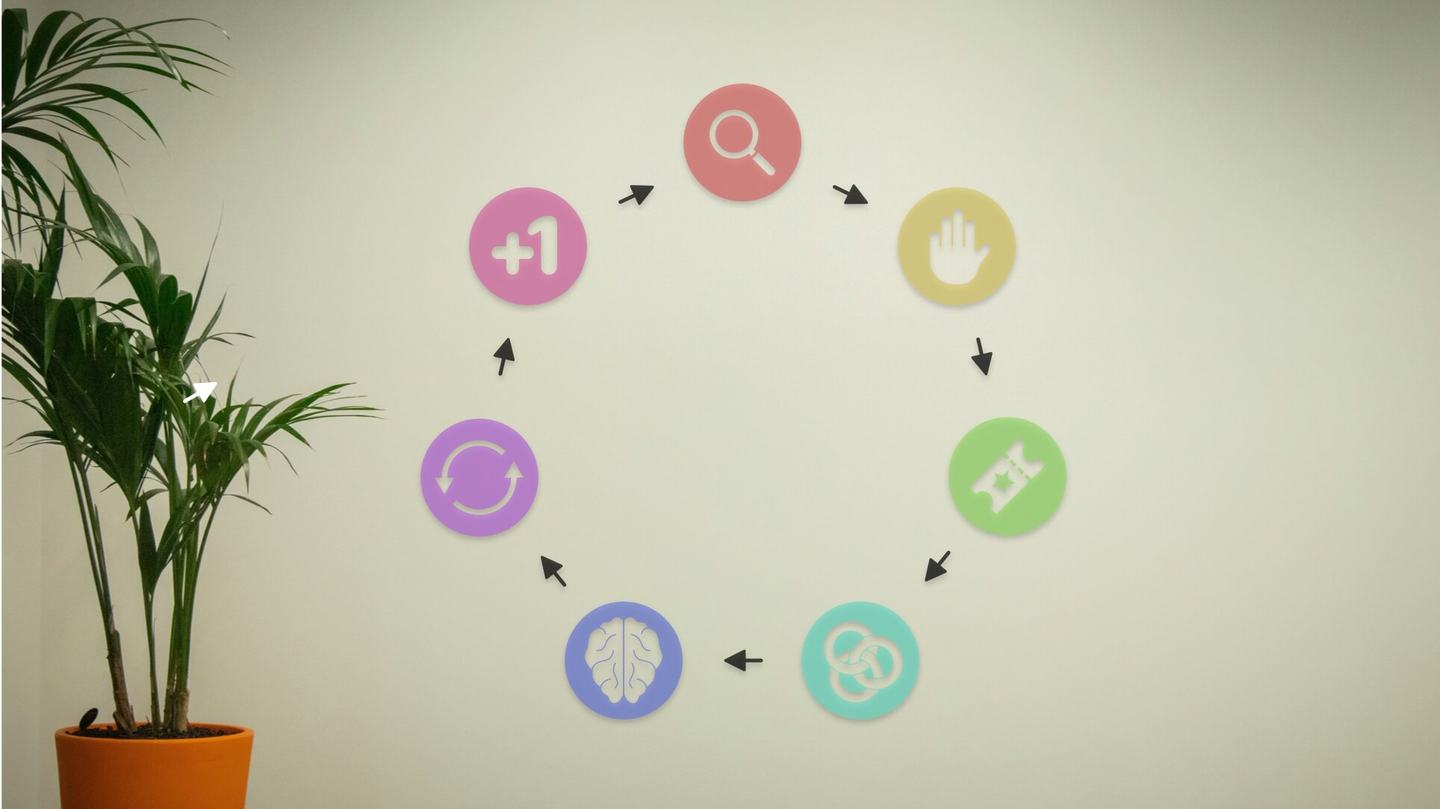
The Return Loop is a simple way to think about how people discover, try, remember, and return to events, spaces, groups, classes, meetups, workshops, and other real-life gatherings.
It’s especially useful if you run something that depends on repeat attendance: a community event, a regular class, a coworking space, a creative workshop, a local night, a festival programme, a club, a choir, a support group, or anything else where the magic depends on people turning up more than once.
A lot of event promotion focuses on the first sale: the ticket, the booking, the RSVP, the bums-onseats moment. That matters, obviously... but the first visit is only part of the story.
So what helps someone go from “I might give this a try” to “this is a thing I do”?
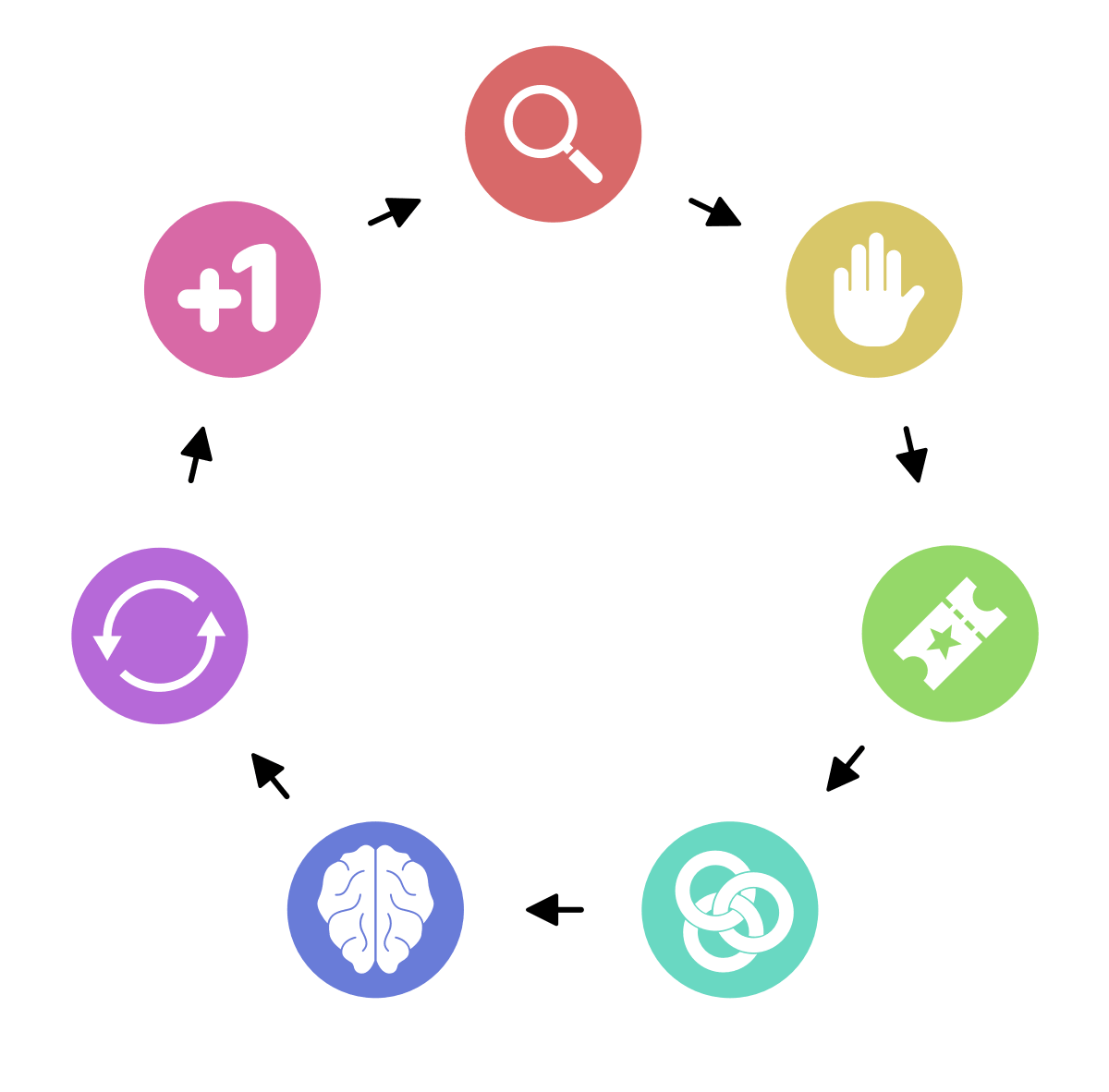
The seven stages of the Return Loop
The Return Loop has seven parts:
- Find
- Trust
- Turn up
- Belong
- Remember
- Come back
- Bring someone
They don’t always happen neatly, and real human behaviour refuses to conform to diagrams. But as a working model, it can help you spot where people might be falling out of the loop.
Remember, if people aren't coming back, it doesn't automatically mean there's a problem with the event.
It might mean they never found the right information, or they were interested but unsure. It could mean they came once, enjoyed it, then forgot. Or the next step was never made obvious.
The Return Loop gives us a way to look at all of that without queuing up another Instagram reel or producing an AI poster.
1. Find
Before anyone can come, they have to know the thing exists. This sounds obvious, but it's often where the loop breaks first.
You can't come to something you've not heard of. And even if you have, it'll probably take more than one half-forgotten mention for you to act.
On average, we have to hear something seven times before we'll act.
So the “Find” step is about discoverability. That includes the obvious stuff: your website, listings, posters, social media, search results, newsletters, flyers, venue noticeboards, partner organisations, and word-of-mouth.
But it also includes whether people can quickly understand what your thing actually is.
A listing that says “Join us for an evening of connection, creativity and community” might sound nice, but it can't tell a person whether they need to book, whether it costs money, whether they can come alone, whether they need experience, or whether they’ll be expected to talk to strangers in a circle.
Finding isn't just about visibility, it's about clarity.
Here are some useful questions to ask yourself:
- Where would someone naturally look for this?
- What words would they use?
- Is the event easy to understand in five seconds?
- Is the practical information obvious?
- Can someone send the link to a friend without adding a long explanation?
2. Trust
Once someone's found the thing, they need to feel safe enough to take it seriously.
Trust doesn't mean they need to trust you with their deepest secrets – it means they need enough confidence to think “yes, this looks real, suitable, and worth the risk”.
Because turning up to something new is a risk.
- You might waste an evening.
- You might feel awkward.
- You might be the only new person.
- You might arrive at the wrong entrance (me at 100% of all events).
- You might discover it's not really for people like you.
- You might get cornered by someone loudly telling you about Magic the Gathering (a cheap shot, but the struggle is real).
Trust is built by reducing uncertainty. That could mean good photos, clear copy, a named organiser, plain language, accessibility information, a code of conduct, travel details, refund information, FAQs, testimonials, or simply a tone that feels human rather than corporate.
People are often not asking “is this good?” but “will I be OK there?”
Some useful things to ask yourself:
- What might make someone hesitate?
- What are they worried could happen?
- Does my webpage answer the awkward questions?
- Do we sound like real people?
- Can someone picture what'll happen when they arrive?
3. Turn up
This is the moment people actually come through the door. It's tempting to treat this as the end point – the booking happened, the ticket was sold, the attendee attended, job done. ☑️
But for the Return Loop, “turn up” is only the midpoint. This stage is about removing friction between someone deciding to come and successfully arriving.
That includes reminders, directions, timings, what to bring, what to expect, where to go, what happens if they're late, and whether they can find a human being when they get there.
A lot of no-shows aren't doing it on purpose – they're evidence of a lack of momentum.
- Someone meant to come, but forgot.
- They were anxious and didn't get a reassuring nudge.
- They couldn't find the address quickly.
- They were unsure whether it was still happening.
- They lost the original email.
- Life got in the way, or a cat sat on them.
It's tempting to think of over communication as nagging or pestering, but it's essential so people don't miss things.
Some useful things to ask yourself:
- What does someone need to know the day before?
- What does someone need to know on the day?
- Are directions and timings easy to find?
- Do reminders feel helpful rather than panicky?
- Is there a clear route from booking to arrival?
4. Belong
This is the bit that happens in the room. People might come for the activity, but they often return because of how they felt.
Belonging doesn't have to mean instant lifelong friendship or everyone forming a WhatsApp group before they've taken their coats off. For some people, belonging simply means: “I knew what to do”. For others it means “someone noticed I was new”, “no-one made me feel silly”, or “I could join in without having to perform a more confident version of myself”.
Belonging is shaped by tiny signals:
- How people are welcomed
- Whether regulars clump together
- Whether the format is explained
- Whether new people are introduced gently
- Whether there's a clear beginning and end
- Whether people know what's expected of them
This is where digital work meets real-life facilitation. The website can set expectations, but the room has to keep the promise.
Some good questions to ask yourself:
- How does a newcomer know what to do?
- Are regulars helping or accidentally forming a wall?
- Is there a gentle first step into participation?
- Does the event have a clear shape?
- What would make someone think, “I could come back here”?
5. Remember
People are busy; their calendars are full, their phones are awash with notifications; their brains are doing their best.
Even if someone enjoyed your event, they might not remember to come back. That doesn't mean it was forgettable – it means remembering needs help.
This stage is about leaving people with something that sticks. That could be a follow-up email, a photo, a playlist, a useful resource, a short recap, a “thanks for coming”, a date for the next one, or a small reminder of the feeling they had in the room.
The point is not to create content for the sake of content, but to help the experience echo.
Some useful questions to ask yourself
- What happens after someone leaves?
- Do we thank people properly?
- Do we remind them what they were part of?
- Do we give them an easy next step?
- Is the next event visible while the good feeling is still warm?
6. Come back
This is where occasional attendance becomes a habit. Coming back is easier when the next step is obvious. That could mean a recurring rhythm, a “next date” email, a calendar invite, a membership option, a season pass, a regular newsletter, or simply a clear line that says “we do this every month, and you’d be very welcome next time”.
The mistake is assuming that people who enjoyed themselves will automatically work out how to return. Some will, many won’t. Not because they are uninterested, but because their attention moved elsewhere.
This stage is about making return feel natural, timely, and low-effort.
Some useful questions to ask yourself
- Is the next date easy to find?
- Do people know whether they are expected or welcome to return?
- Is there a rhythm people can build into their lives?
- Are we inviting people back, or just hoping they remember?
- What is the smallest possible next step?
7. Bring someone
The strongest loop is not just when someone comes back – it's when they bring someone with them. This is where growth starts to feel less like constant promotion and more like momentum.
But people need help here too.
Even if someone loves what you do, they might not know how to explain it. They might not know whether guests are welcome, or whether they'll sound like they're pitching a cult. All it might take is a simple link, a short description, a discount, a bring-a-mate invitation, or a reason to think of someone specific.
Word-of-mouth works best when it's easy to pass on. People don't just share information; they share confidence.
Some useful questions to ask yourself
- Is it obvious that people can bring a friend?
- Have we given them simple words to describe it?
- Is there a link or page that explains the event clearly?
- Would sharing this make someone look thoughtful, not spammy?
- What would make the invitation feel generous?
Where the loop breaks
The useful thing about the Return Loop is that it helps you diagnose problems.
- If attendance is low, the issue might be at the Find stage.
- If people visit the page but don't book, the issue might be Trust.
- If people book but don't come, look at the Turn up stage.
- If people come once but disappear, look at Belong, Remember, and Come back.
- If people love it but don't spread the word, look at Bring someone.
This is why “do more promotion” is often too blunt. Sometimes the problem isn't volume, it's is a missing step.
- A poster can't fix a confusing event page.
- A reminder email can't fix a bad welcome.
- A great night can't help people return if they never hear from you again.
- A loyal regular can't bring a friend if they don't know what to send them.
Each stage supports the next.
The loop is not a funnel
Funnels are useful for some things, but they can make people look like units being pushed towards a transaction.
The Return Loop treats attendance as a relationship – not a huge, dramatic, lifelong relationship; just a small human one.
- Someone hears about a thing.
- They wonder if it is for them.
- They take a chance.
- They have an experience.
- They remember it.
- They return.
- They invite someone else.
Then the loop begins again. That's how real-life gatherings become part of people’s lives.
How to use the Return Loop
You can use the Return Loop as a quick checkup for an event, space, or programme. Take one stage at a time and ask "What are we asking people to do here, and have we made that easy?"
You don't need to fix everything at once. Often, one small improvement can make the whole loop work better:
- A clearer event page
- A better reminder email
- A warmer welcome for newcomers
- A follow-up message after the event
- A visible next date
- A simple “bring someone” invitation
The Return Loop helps you notice the bits where good intentions leak away because nobody had the time, language, or structure to connect them... and that's fixable.
A simple Return Loop checklist
For your next event or gathering, ask
🔍 Find
Can people easily discover this and understand what it is?
🤝 Trust
Have we answered the questions that might make someone hesitate?
👋 Turn up
Have we made it easy to get from booking to arrival?
🫶 Belong
Will a newcomer know what to do and feel welcome doing it?
🐘 Remember
What helps the experience stick after they leave?
📆 Come back
Is the next step obvious, timely, and low-effort?
👩🏻🤝👩🏿 Bring someone
Have we made it easy for people to invite someone else?
You don't need perfect answers – you just need enough to keep the loop moving.
Want help with yours?
I help people who run physical spaces, events, classes, community groups, and local gatherings improve the digital bits that help people find, trust, and return to them.
That could mean clearer event pages, better email journeys, sharper follow-up, more useful websites, or a calmer look at where people are dropping out of the loop.
If you run something good and want more people to come back to it, check out my Rescue Kits.